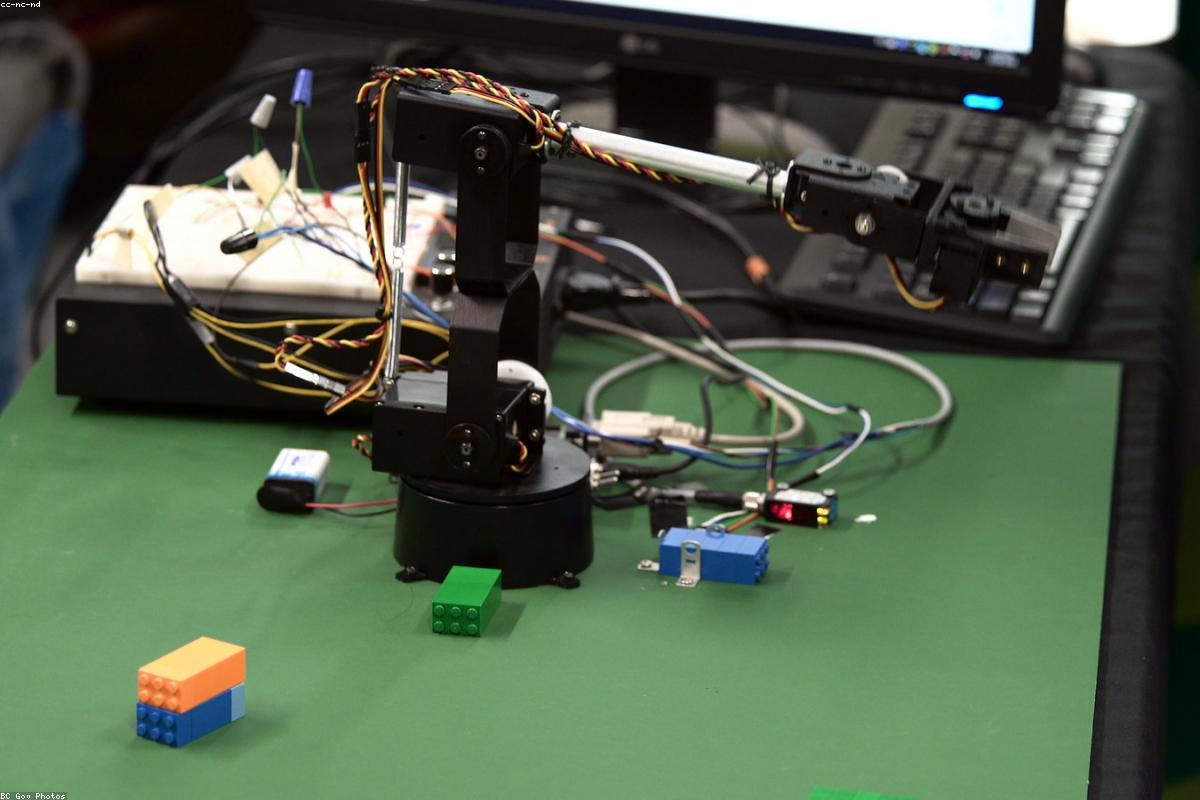
The global logistics landscape is undergoing a seismic shift. In 2025, the integration of Artificial Intelligence (AI) and hyper-automation is no longer a luxury but a fundamental necessity for B2B enterprises aiming to maintain a competitive edge. At All IT Solutions, we've observed that the transition from traditional, reactive supply chain models to proactive, AI-driven ecosystems is accelerating at an unprecedented pace. This transition is characterized by the deployment of intelligent swarms, cognitive orchestration layers, and a relentless focus on reducing latency across the entire value chain.
The Evolution of Technical Orchestration: From Static Logic to LLM Orchestration
One of the most significant breakthroughs in 2025 is the adoption of Large Language Model (LLM) orchestration within the logistics framework. Unlike traditional rule-based systems that struggle with unstructured data, LLM orchestration allows for the seamless integration of disparate data streams—ranging from real-time weather reports and geopolitical news to internal inventory levels and shipping manifests. This "cognitive layer" acts as the central nervous system of the supply chain, interpreting complex signals and executing intelligent responses without human intervention.
By leveraging advanced orchestration layers, companies can now automate complex decision-making processes that previously required hours of manual analysis. For instance, when a sudden maritime disruption occurs at a major port, an LLM-orchestrated system can analyze the latency impacts across the entire global supply chain, suggest alternative multi-modal routes, and even draft communications to stakeholders, all within milliseconds. This level of agility is what defines the modern, resilient logistics operation, allowing businesses to pivot instantly in response to volatility. The technical architecture involves connecting LLMs to internal vector databases containing historical logistics data, enabling the model to provide context-aware recommendations that are both accurate and actionable.
Real-time Latency and the Role of Edge Computing in AMRs
Autonomous Mobile Robots (AMRs) have become the workhorses of the modern warehouse. However, their efficiency is heavily dependent on ultra-low-latency data processing. In 2025, the shift toward edge computing has minimized the reliance on centralized cloud servers for immediate operational decisions. This decentralization of compute power is essential for the safe and efficient operation of robotic swarms in a high-density environment.
By processing data at the "edge"—directly on the AMR hardware or within the local warehouse 5G/6G network—logistics providers can ensure that obstacle avoidance, path planning, and sensor fusion happen in near real-time. This reduction in latency is critical for mission-critical safety protocols and maximizes overall warehouse throughput. At All IT Solutions, we specialize in deploying the robust network infrastructure and edge-optimized hardware required to support these high-speed environments. The integration of 5G URLLC (Ultra-Reliable Low-Latency Communications) allows for network slicing, ensuring that robot control traffic is prioritized over less critical data streams. For more detailed information on our specialized networking capabilities, visit All IT Solutions Services.
Implementing Zero-Trust Architecture in the Distributed Logistics Perimeter
As logistics networks become more interconnected and dependent on IoT ecosystems, the attack surface for cyber-threats expands exponentially. The adoption of a Zero-Trust security model is now mandatory for protecting sensitive supply chain data and operational integrity. Zero-Trust operates on the principle of "never trust, always verify," ensuring that every request for access to a system—whether internal or external, human or machine—is rigorously authenticated, authorized, and continuously validated.
In a modern logistics context, this means that every IoT sensor, every AMR, and every third-party carrier platform must be treated as a potential entry point. Implementing micro-segmentation and mutual TLS (mTLS) allows for a secure, compartmentalized network where a breach in one area does not compromise the entire system. Sophisticated Identity and Access Management (IAM) protocols ensure that only authorized entities can interact with the control plane of the logistics stack. Security is at the heart of our consulting services, ensuring that your automated future is built on a foundation of trust and resilience. We help our clients implement continuous monitoring and automated threat response systems that can isolate compromised nodes within seconds.
Agile Logistics: CI/CD Pipelines for Mission-Critical Software
The software driving logistics is no longer a static installation; it is a living entity that requires constant updates, patches, and optimizations. Continuous Integration and Continuous Deployment (CI/CD) pipelines have become essential for logistics tech teams. Whether it's updating a machine learning model for better predictive maintenance or patching a security vulnerability in a WMS (Warehouse Management System), the ability to deploy code rapidly and reliably is a major differentiator in 2025.
CI/CD allows for automated testing, security scanning, and validation within a development pipeline, ensuring that new features do not introduce regressions or vulnerabilities into the mission-critical logistics stack. This technical rigor ensures that the automation remains stable and performant even as it evolves to meet new market demands. We implement "blue-green" and "canary" deployment strategies that allow our clients to roll out updates to individual warehouse locations before a global release, minimizing risk and maximizing uptime. The focus is on creating a "DevOps" culture within logistics organizations, where software quality is everyone's responsibility.
Predictive Analytics and the Rise of the Digital Twin
Predictive analytics has moved far beyond simple seasonal forecasting. In 2025, Digital Twins—high-fidelity virtual replicas of physical supply chains—allow companies to run complex "what-if" scenarios in a risk-free digital environment. By feeding real-time data from thousands of IoT sensors into these models, logistics architects can predict equipment failures, identify bottlenecks before they manifest, and optimize inventory levels with pinpoint accuracy across multiple geography-specific hubs.
This data-driven approach reduces waste, lowers operational costs, and significantly improves customer satisfaction through more accurate Delivery Time Predictions (DTP). The synergy between AI-driven inference and Digital Twins is creating a high-fidelity map of global trade, allowing for unprecedented visibility into every node of the network. At All IT Solutions, we help businesses build and manage these sophisticated digital architectures, integrating them with existing ERP systems for a "single source of truth." The result is a supply chain that is not just reactive to the present, but anticipatory of the future.
Hyper-Automation: The Integration of Computer Vision and PLC
Beyond navigation, the actual handling of goods is being transformed by the integration of AI-driven computer vision and high-speed Programmable Logic Controllers (PLCs). In 2025, picking and packing systems are capable of identifying and handling heterogeneous items with the same dexterity as a human, but with greater consistency and speed. This is made possible by deep learning models trained on millions of object permutations, allowing robots to adjust their grip and force in real-time based on the item's material and weight.
The technical challenge here is the synchronization between the high-level AI vision system and the low-level machine control. This requires sophisticated real-time operating systems (RTOS) and deterministic communication protocols. By automating the most labor-intensive parts of the fulfillment process, B2B enterprises can scale their operations without a linear increase in overhead. This hyper-automation also extends to quality control, where high-resolution cameras detect defects or damages in transit, automatically triggering replacement orders without human intervention.
Conclusion: The Future is Automated, Intelligent, and Secure
The revolution in logistics management is not just about replacing manual tasks with machines; it's about the intelligent orchestration of technology, data, and human expertise. As we navigate the complexities of 2025, the winners will be those who embrace LLM orchestration, ultra-low-latency edge computing, and robust Zero-Trust security frameworks. These technologies are the building blocks of a resilient, scalable, and profitable supply chain.
Are you ready to transform your logistics operations with cutting-edge IT solutions? All IT Solutions is your partner in technical excellence. We provide the expertise needed to navigate the intersection of AI, networking, and cybersecurity. Contact us today for professional consulting and let us help you lead the charge into the future of automated supply chain management. Explore our full range of technical offerings at All IT Solutions Services. Together, we can build a logistics infrastructure that is ready for whatever the future holds.
Frequently Asked Questions
Answers based on this article.
Post Tags